Large selection of exciting producers and fast flat rate shipping!
Your cart is currently empty
Product image slideshow Items
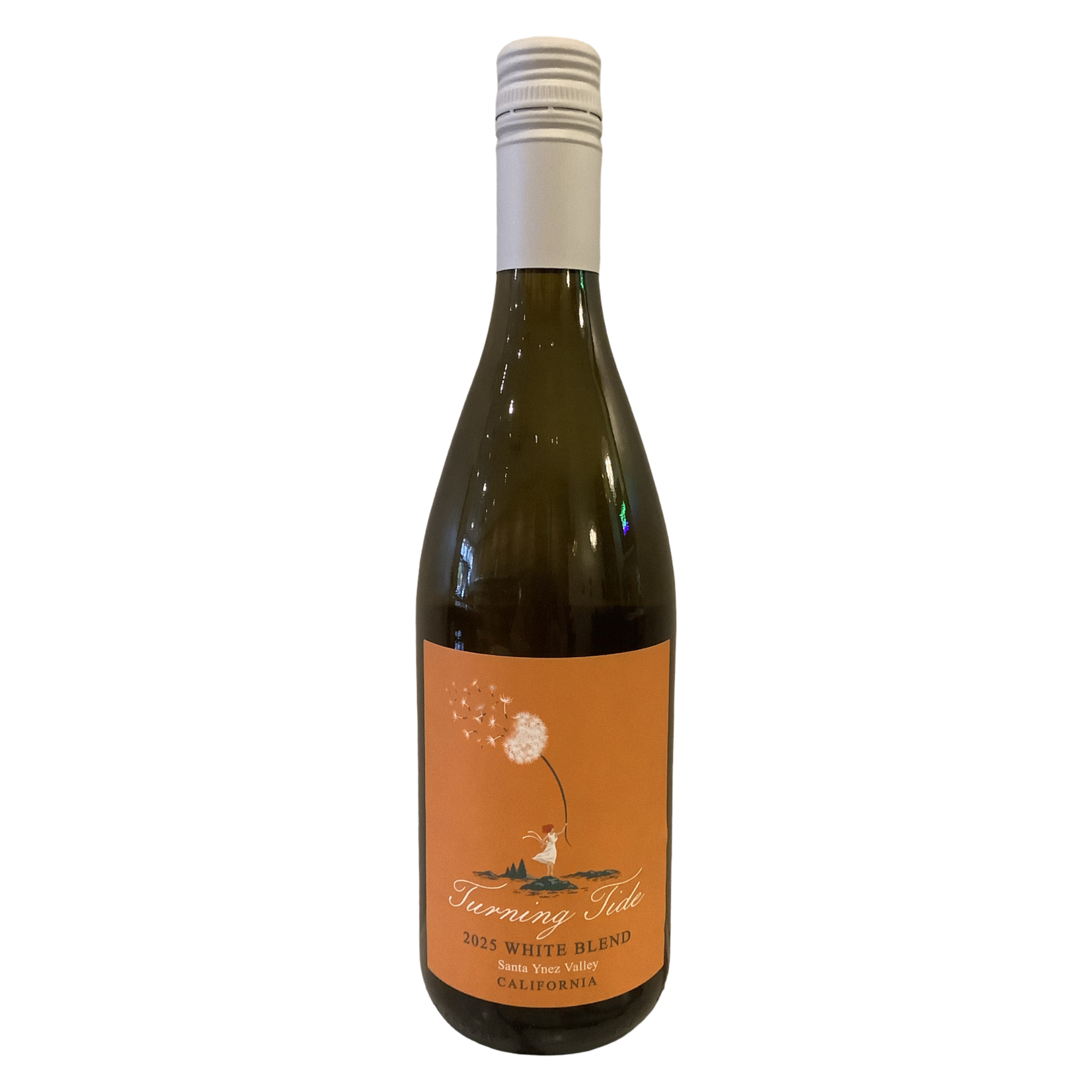
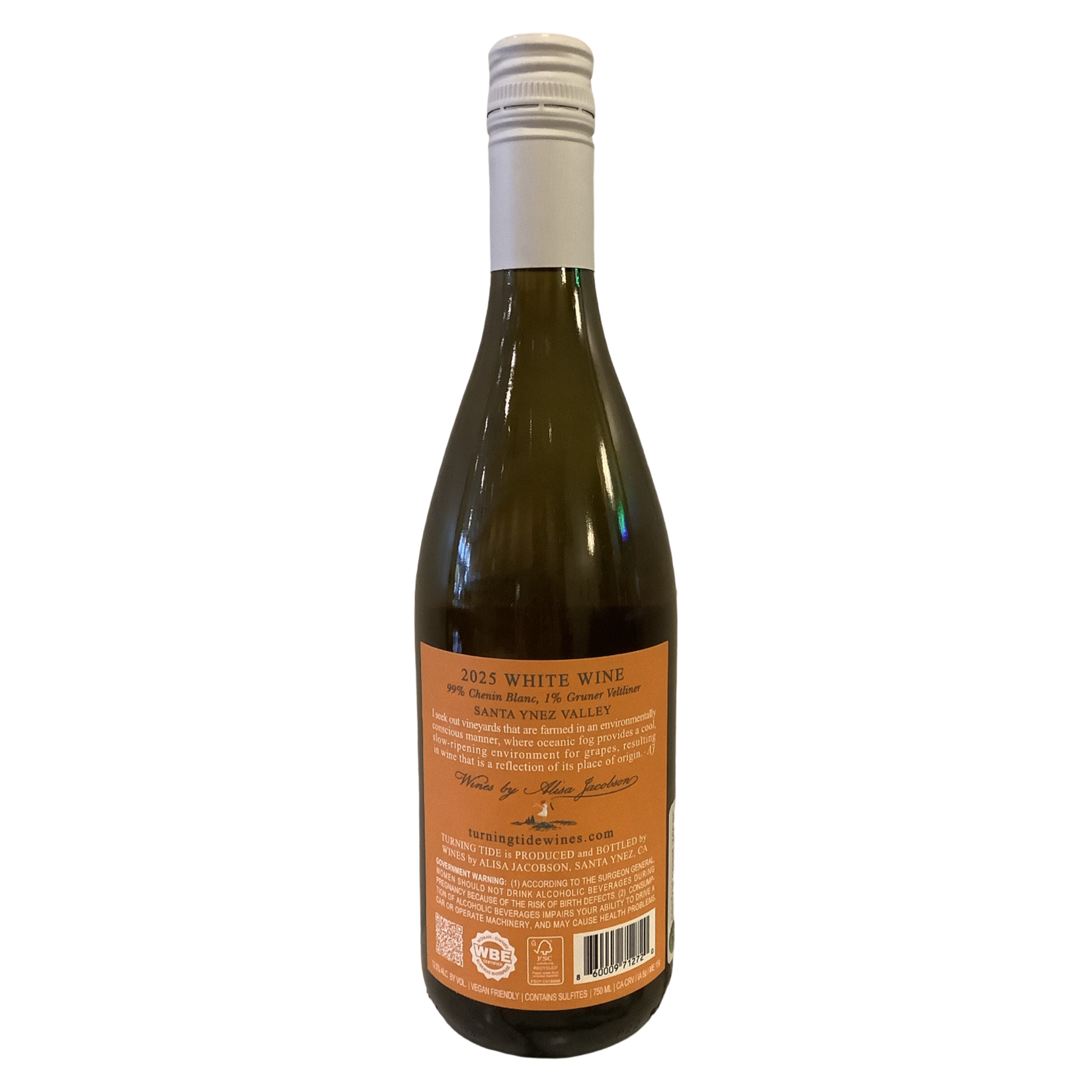
99% Santa Ynez Chenin Blanc with 1% Grüner Veltliner. Brief skin contact adds waxy texture to the wine’s quince, white peach and citrus notes. Bright acidity and a clean mineral finish beg for some accompanying seafood.
The 2025 Turning Tide White Blend is a Santa Ynez Valley wine from Alisa “AJ” Jacobson, who founded Turning Tide in 2018 after nearly two decades making wine around the world, most notably as the first employee and eventually VP of Winemaking at Joel Gott Wines. A UC Davis viticulture and enology graduate, Jacobson built Turning Tide around a deceptively simple idea: healthier vineyards make more expressive wines. She favors organically or sustainably farmed sites, earlier picking for natural acidity and moderate alcohol, restrained oak and minimal sulfur.
So here's something I want explained to me. The back label sez this “blend” is 99% Chenin Blanc and 1% Grüner Veltliner. One percent Grüner? What the hell is the Grüner doing in there? Did AJ think she needed an umlaut in there to be taken seriously? Is it the diversity hire? Did the Chenin need adult supervision?
Because apparently we're supposed to believe that this microscopic quantity of Grüner has a job. The winemaker might say, “No, no, you don't understand. It adds aromatic complexity.” Really? One percent? At that point we're not blending wine, someone mislabeled a bin of grapes, or we're administering a homeopathic remedy. “There's Grüner in there.” Where? “Oh, you can't actually see it. But the wine remembers.”
Now, to be fair, aroma is funny stuff. A tiny amount of something pungent can change the whole picture. Garlic knows this. Cumin knows this. The guy wearing too much cologne at the discotecque definitely knows this. So maybe a particularly aromatic Grüner (after all, it’s Santa Barbara County, not Langenlois we’re talking here), adds a little pepper, citrus peel, something green and herbal. But structurally? Come on. One percent isn't rebuilding the wine. The Chenin is still running the meeting and holds check-writing priveleges.
More likely somebody was sitting at a blending table with a bunch of glasses going, “Try 2%.” Nope. “Try 1%.” Hey! That's better! And maybe it actually was. Winemakers do this all the time. It justifies their salaries. Tiny additions sometimes can somehow pull a wine together. It's like salt in pastry. You don't bite into a croissant and yell, “Yum, sodium!” But leave it out and something's missing.
Or maybe they just had a little Grüner sitting around. What are you going to do with twelve gallons of Grüner? Launch a wine club? Maybe in Napa, but not Santa Ynez.
But here's the best part. 99% Chenin Blanc, 1% Grüner Veltliner is far more interesting than “100% Chenin Blanc.” You read that back label and immediately start asking questions. Why Grüner? Why one percent? Who decided this? Was there a 99.5% trial? How bad was the wine at 98%? Did somebody accidentally pour Grüner into the Chenin and everybody looked at each other and said, “You know what? Don't touch it.”
And that's probably the right way to think about the 1%. It's a dash of bitters in a cocktail. You're not necessarily supposed to taste the Grüner. You're supposed to taste the wine and think, “Something happened here. What it is ain’t exactly clear. There’s a man with a Grüner over there, telling me I got to beware.” Or something like that.
Frankly, that is a hell of a lot of responsibility to put on one percent.