Large selection of exciting producers and fast flat rate shipping!
Your cart is currently empty
Product image slideshow Items
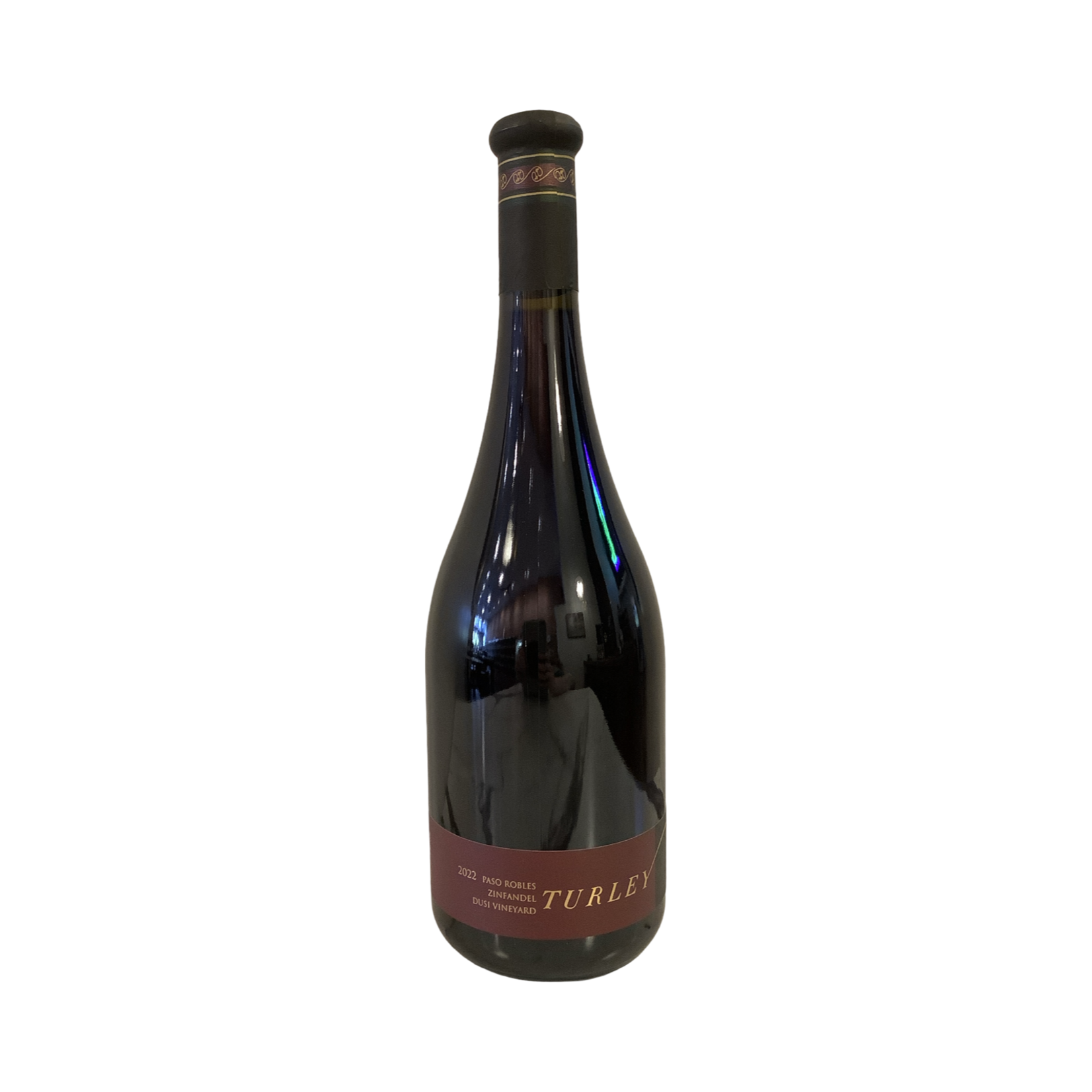
Classy plush blackberry, black cherry, lavender, pepper, and brambly, gravelly spice. A velvety, powerful finish. Suave, sophisticated, if James Bond were a Paso Zin, this is the one he'd be. Vines planted in 1945.
If California Zinfandel today possesses something approaching dignity, much of the credit belongs to Turley Wine Cellars. Before Turley’s ascent in the 1990s, Zinfandel occupied an awkward cultural station. It was beloved, certainly, but often in the manner of an eccentric uncle whose company one enjoyed without necessarily taking him seriously (even if an inheritance was potentially involved in the future). For most consumers, the grape was associated more with rustic exuberance and high alcohol than with nobility of site.
Into this scenario stepped founder Larry Turley, a practicing emergency room physician whose “day job,” as it was often called with mild disbelief, financed and informed an almost missionary devotion to old-vine California viticulture. Turley’s vision was not merely to produce Zinfandel, but to demonstrate that the grape could articulate terroir with the same fidelity one expected from Pinot Noir or Cabernet Sauvignon. At a time when many wineries blended indiscriminately for consistency, Turley insisted upon vineyard designation, drawing distinctions between soils, climates, elevations, and exposures with almost Burgundian conviction.
The scale of that endeavor became extraordinary. Turley eventually assembled fruit from more than fifty vineyards scattered across California, from the volcanic red soils of Amador County to the ancient sand and gravel of Napa Valley, Paso Robles, Contra Costa County, and beyond. Many of these sites were populated by venerable, head-trained vines planted in the late nineteenth or early twentieth centuries, vineyards that might otherwise have disappeared beneath housing tracts or been grafted over to more fashionable varieties. Larry’s sister Helen Turley, and eminent winemaker on her own terms got the winery off to a good start, but under the guidance first of winemaker Ehren Jordan and later Tegan Passalacqua, Turley refined its style from one sheer exuberance and shifted it toward something more articulate and site-conscious. Jordan brought a palate for nuance and structural precision, helping to move Turley away from the caricature of bruising California Zin and toward wines that retained richness while gaining shape and aromatic complexity. Passalacqua, meanwhile, deepened the winery’s commitment to farming, old-vine preservation, and historic vineyard stewardship, becoming perhaps the state’s most eloquent advocate for California’s ancient vineyards as cultural patrimony rather than mere agricultural assets.
And indeed, that may be Turley’s lasting contribution. More than any single bottling or critic’s score, the winery altered the conversation around Zinfandel itself. It persuaded sommeliers, collectors, and even skeptical Europeans that California’s old vineyards constituted something rare and irreplaceable. Turley’s wines did not attempt to tame Zinfandel’s essential personality. Their briary fruit, spice, occasional wildness, and sunlit generosity remained intact. But they framed those qualities within the context of place, history, and viticultural seriousness. One began speaking not merely of “Turley Zin,” but of Hayne Vineyard, Pesenti, Duarte, Dogtown, or Ueberroth as distinct voices in a larger Californian chorus. In that sense, Turley performed for Zinfandel what the best growers of the Rhône once did for Syrah. It transformed a grape once admired chiefly for exuberance into one capable of eloquence.